
An Environmental Solution for Urban Renewal Challenges
Israel’s rapid urban renewal brings many benefits to residents, but it also generates a significant challenge: a continuous increase in construction and demolition (C&D) waste.
In the past, a lack of organized solutions led to illegal dumping and serious environmental hazards.
To address this issue, the Dan Region Association for Sanitation established an innovative construction waste sorting and recycling facility at Hiriya Recycling Park in 2023, in partnership with Redimix-Shtang Recycle Israel and with the support of the Ministry of Environmental Protection.
Capacity and Processes
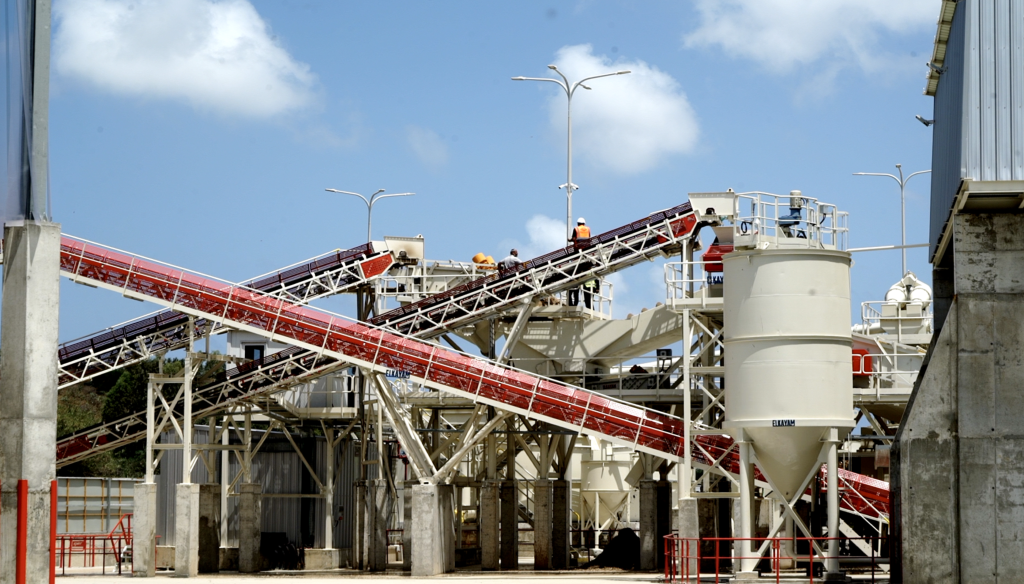
The facility processes up to 2,000 tons of construction waste per day, using crushing, screening, sorting, and washing technologies.
The result: high-quality recycled building materials, suitable as premium raw materials for new construction.
Types of Construction Waste Processed
The facility handles most common types of construction waste, including:
- Concrete and blocks
- Soil and earth
- Wood
- Metals
- Cardboard
- Plastic products
Recycling Process Stages
- Reception and Documentation
Vehicles are weighed and logged upon entry.
After unloading, vehicles are washed to prevent contamination during transport.
- Dry Line – Crushing and Screening
Construction waste (concrete, blocks, sand) is crushed and screened.
The output: aggregates for infrastructure development — roads, pathways, and parks.
All activities take place in an enclosed facility with dust, noise, and odor control systems.
- Wet Line – Washing and Upgrading
Aggregates are intensively washed in a closed-loop water system.
This process raises the material quality to a level comparable to quarried stone. Water is recycled and reused within the facility.
Final Products
The Wet Line produces three main outputs:
- Washed sand
- Fine gravel (“shumshum”)
- Compressed clay
These materials are comparable in quality to quarried products and serve as raw materials for a wide range of construction products, including ready-mix concrete.
For this reason, the facility is also called the “Urban Quarry of the Dan Region.”
Contribution to the Circular Economy
- Preventing illegal dumping and reducing environmental hazards
- Reusing raw materials in the construction industry
- Reducing quarrying and mining, preserving natural resources
This initiative transforms construction waste from an environmental problem into an opportunity, supporting a smarter, closed-loop circular economy.